


As someone who grew up in Chiang Mai, I never stopped to think about safety. Now that I’m a mother with a more diverse network of friends and neighbors from around the world, I’ve come to better appreciate how special this is.
Safety is a key factor, especially for families, when planning a visit or move to Chiang Mai, which is why I appreciated the recent acknowledgement as one of the safest cities in the world: Chiang Mai was voted the #1 safest in Southeast Asia in the 2025 Numbeo Safety Index.
As of February 2026, we scored 77.9, placing us 19th globally and 3rd in Asia—ahead of hubs like Tokyo, Kuala Lumpur, and even Singapore in some categories. These rankings reflect locals’ and expats’ perception of crime, comfort walking alone at night, and low incidence of violent crime.
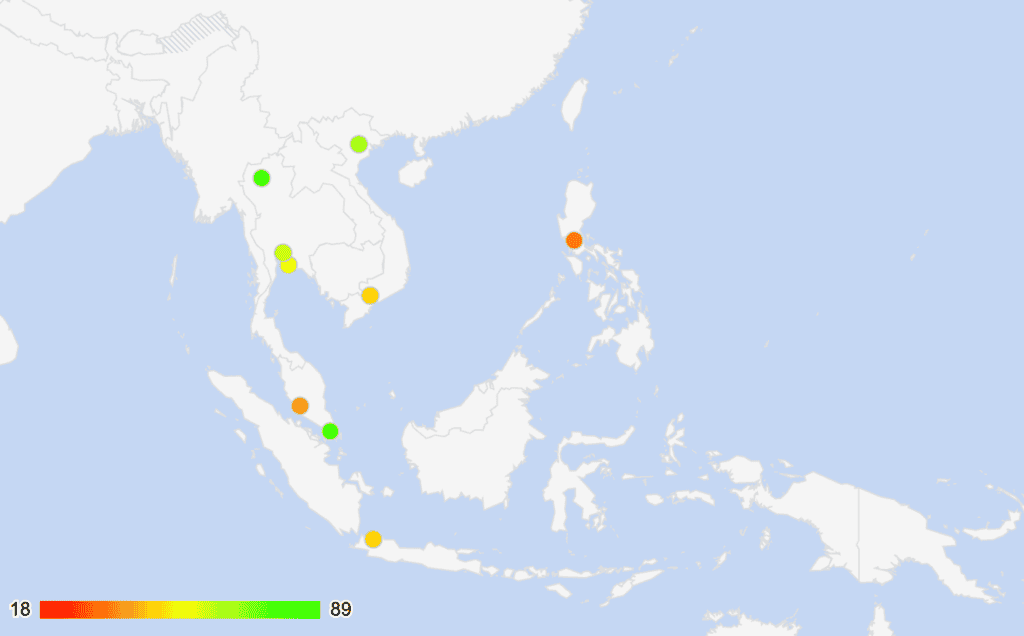
Safety, along with lifestyle and affordability of course, are obviously big reasons why so many families, solo travelers, and digital nomads choose to settle here.
But safety is about more than just stats and rankings. It’s about whether you’re relaxed on the street or constantly scanning for hazards. Whether the health system works and your insurance provides coverage. Whether your limited Thai affects your ability to get your kid’s fever treated at 2 a.m.
While I wholeheartedly agree Chiang Mai is a very safe place to live and raise a family, there’s plenty you should know when you move here so you can take the right precautions for your family, but also know what you don’t need to stress about.
This guide covers both the data and the day-to-day realities of staying safe, well, and supported in Chiang Mai—including how to get covered with the right health insurance and where to go for care. For a healthcare costs breakdown, see our cost of living guide.
Why Chiang Mai Ranks Among the World’s Safest Cities
- Ranked 19th globally in the 2025 Numbeo Safety Index (Score: 77.9)
- Low rates of violent crime and strong sense of community trust
- Known for hospitality, especially toward women, families, and foreigners
- Infrastructure and cultural norms support calm, low-conflict daily life
- Safer than many popular Asian cities like Bangkok, Hanoi, and Singapore
Quick Answers to Your Top Chiang Mai Safety Questions
- Q: What’s the single biggest safety risk for foreigners in Chiang Mai?
- Answer: Based on data and local experience, the roads and traffic pose the most significant safety risk in Chiang Mai, especially for motorbike riders and pedestrians. While other risks exist, road accidents lead to the vast majority of serious incidents involving foreigners. We delve deep into navigating this challenge in our ‘Traffic’ section and offer comprehensive solutions in our ‘Health & Safety Tips’ below.
- Answer: Based on data and local experience, the roads and traffic pose the most significant safety risk in Chiang Mai, especially for motorbike riders and pedestrians. While other risks exist, road accidents lead to the vast majority of serious incidents involving foreigners. We delve deep into navigating this challenge in our ‘Traffic’ section and offer comprehensive solutions in our ‘Health & Safety Tips’ below.
- Q: Are there any particular times of year Chiang Mai is less ‘safe’?
- Answer: The main seasonal consideration is ‘burning season’ (roughly late February to April) when air quality can be significantly unhealthy due to agricultural burning. The rest of the year generally offers good air quality. You’ll find full details on managing this period in our ‘Pollution & Environment’ section and even more in our linked ‘Chiang Mai Burning Season Survival Guide’.
- Answer: The main seasonal consideration is ‘burning season’ (roughly late February to April) when air quality can be significantly unhealthy due to agricultural burning. The rest of the year generally offers good air quality. You’ll find full details on managing this period in our ‘Pollution & Environment’ section and even more in our linked ‘Chiang Mai Burning Season Survival Guide’.
- Q: Beyond crime and traffic, what are the most common safety concerns for expats?
- Answer: Common health concerns include mosquito-borne illnesses like dengue, intense sun exposure (leading to sunburn/heatstroke), and ensuring food and water safety (e.g., tap water isn’t potable). Adapting to the tropical climate and being mindful of air quality also play a role. Our ‘Health & Safety Tips’ section covers these and more in detail.
- Answer: Common health concerns include mosquito-borne illnesses like dengue, intense sun exposure (leading to sunburn/heatstroke), and ensuring food and water safety (e.g., tap water isn’t potable). Adapting to the tropical climate and being mindful of air quality also play a role. Our ‘Health & Safety Tips’ section covers these and more in detail.
- Q: Do I really need to get an International Driving Permit (IDP) before arriving?
- Answer: Absolutely, yes. If you plan to rent or drive any vehicle (car or motorbike), an IDP with the correct endorsement is legally required. Without it, you could face significant fines, and crucially, your travel insurance will likely be invalid in case of an accident. This critical step is highlighted in our ‘Pre-Arrival Essentials’ checklist.
- Answer: Absolutely, yes. If you plan to rent or drive any vehicle (car or motorbike), an IDP with the correct endorsement is legally required. Without it, you could face significant fines, and crucially, your travel insurance will likely be invalid in case of an accident. This critical step is highlighted in our ‘Pre-Arrival Essentials’ checklist.
- Q: Are there any specific scams tourists or expats should be highly aware of in Chiang Mai?
- Answer: While overall scams are rare, the most commonly reported for foreigners involve padded bills at certain nightlife/karaoke venues and fake utility bill collectors demanding cash payment. Always trust your instincts! You’ll find a detailed breakdown of these and other potential scams in our ‘Common Scams to Watch Out for in Chiang Mai’ section.
- Answer: While overall scams are rare, the most commonly reported for foreigners involve padded bills at certain nightlife/karaoke venues and fake utility bill collectors demanding cash payment. Always trust your instincts! You’ll find a detailed breakdown of these and other potential scams in our ‘Common Scams to Watch Out for in Chiang Mai’ section.
- Q: How accessible is mental health support for foreigners in Chiang Mai?
- Answer: Chiang Mai has a surprisingly robust and unique ecosystem for mental health support for foreigners, ranging from English-speaking therapists to various peer support groups. This makes it a significant hub for wellness and recovery in Southeast Asia. We explore this unique aspect in our ‘Mental Health, Community & Emotional Safety’ section.
- Answer: Chiang Mai has a surprisingly robust and unique ecosystem for mental health support for foreigners, ranging from English-speaking therapists to various peer support groups. This makes it a significant hub for wellness and recovery in Southeast Asia. We explore this unique aspect in our ‘Mental Health, Community & Emotional Safety’ section.
- Q: How does Chiang Mai’s safety compare to other major cities in Thailand or Southeast Asia?
- Answer: Chiang Mai consistently ranks as one of the safest cities not just in Thailand, but across Southeast Asia. Its low crime rates and relaxed atmosphere often make it feel significantly safer than bustling metropolises like Bangkok or other popular tourist hubs. Our introduction provides more detail on its impressive global and regional rankings.
- Answer: Chiang Mai consistently ranks as one of the safest cities not just in Thailand, but across Southeast Asia. Its low crime rates and relaxed atmosphere often make it feel significantly safer than bustling metropolises like Bangkok or other popular tourist hubs. Our introduction provides more detail on its impressive global and regional rankings.
- Q: What’s the best health insurance option for expats and digital nomads in Chiang Mai
- Answer: For many expats and digital nomads in Chiang Mai, SafetyWing stands out as a top recommendation. It offers flexible global coverage that includes emergency care in private hospitals, and even covers kids under 10 for free under adult plans — all on a convenient monthly subscription. We dive deeper into why we recommend them in our ‘Do You Really Need Insurance in Chiang Mai?’ section.
If you’ve found our resources useful, please consider signing up for SafetyWing insurance using our affiliate link, which rewards us with a modest commission at no cost to you.
- Answer: For many expats and digital nomads in Chiang Mai, SafetyWing stands out as a top recommendation. It offers flexible global coverage that includes emergency care in private hospitals, and even covers kids under 10 for free under adult plans — all on a convenient monthly subscription. We dive deeper into why we recommend them in our ‘Do You Really Need Insurance in Chiang Mai?’ section.
Thai Emergency Numbers Cheat Sheet
Before we get any further into the meat of this article, it’s worth making sure you’re equipped to get help locally. You cannot call 911 in Thailand, so save these numbers in your phone in case of an emergency.
- 🚑 Medical Emergency: 1669
- 🚒 Fire Department: 199
- 👮 Police (General): 191
- 🚨 Tourist Police (English-speaking): 1155
Thailand’s tourist police function as community liaisons, so whether you’ve lost your wallet or gotten into a heated misunderstanding with a local, they are there to help. Thai officers frequently work with native English-speaking volunteers to serve the community.
What Are the Real Risks of Life in Chiang Mai?
Nowhere in the world is going to be perfectly safe, and many things in life are out of our control. If you’re going to make intentional choices about where to plant your family though, of course you want to score as high on safety and low on risk as you can. Here’s the reality of what you do and do not need to worry about. What risks actually come with living in Chiang Mai?
Crime
Given how many homes in Chiang Mai have fences topped with glass shards and bars on the windows, you might assume break-ins are common. But this is a case where Thai safety-consciousness actually makes the city feel more fortified than it is dangerous. While theft and burglary do occur, they’re rare—and street crime like pick-pocketing is even rarer.
People frequently leave their phones and laptops unattended in Chiang Mai with nothing to worry about. One of our friends rides his $3000 bicycle everywhere and doesn’t have a lock. When Kris first moved to Chiang Mai and hadn’t yet internalized some habits, he left his motorbike parked with the key in the ignition more than once—often in busy areas. Every time, he returned to find it untouched. In fact, more than once, someone had kindly turned the key to the off position so the battery wouldn’t run out.
When thefts do occur, security cameras often come to the rescue. These are prevalent in the city center, installed in most shopping complexes, and also favored by landlords (typically installed facing the street).
Scams exist, and cybercrime targeting Thai nationals is rising, but most foreign visitors are unlikely to encounter these. We offer a section on scams to look out for further down so keep reading or skip ahead.
Traffic
You’d think with Chiang Mai’s notably low crime rate the “boys in brown” would have more time to focus on enforcing the rules of the road – but alas – traffic safety is where Chiang Mai really lets us down.
Thailand unfortunately has one of the highest road fatality rates in the world, and while Chiang Mai is generally safer than many other provinces, we’re certainly not immune. You’ll quickly notice that motorcycles are involved in a staggering 80-85% of all accidents, and sadly, pedestrians are among the most vulnerable.
It’s not uncommon to see the local news fill with sobering statistics, especially during the big holiday periods. Our annual Songkran (Thai New Year) and Western New Year holidays are notoriously dubbed the ‘Seven Dangerous Days’ because, despite all efforts, accident rates, injuries, and fatalities can more than double compared to regular days. Speeding and drunk driving are, predictably, the main culprits, so always be extra vigilant, whether you’re driving, riding, or simply walking across the street.
The reality is that what few road rules we have here are not very well enforced. While traffic stops are ubiquitous, aside from tourists getting dinged for driving without a license and reminding locals to pay annual tax, these don’t do much. The fine for not wearing a helmet has recently been raised to ฿2000, but where we live in the outskirts, we see plenty of people still riding without. Many drivers on the road are unlicensed, and visitors unfamiliar with our roads and rules often hop on a motorbike here for the first time in their lives.
We’ve been in that boat ourselves so we wouldn’t call it a death sentence, but you definitely take your life into your own hands. As happy-go-lucky singletons, we both enjoyed plenty of scooter adventures and we’re both lucky to never have had an accident. Now that we have a family, though, we’re grateful for the bulk our Honda-CRV provides against the perils of Thai roads.
For our advice on navigating traffic, keep on reading for our safety tips section below.
Pollution & Environment
After traffic, the greatest risks you’re exposed to are environmental. There are seasonal realities to keep in mind and plan for. Living in the tropics requires a different mindset than most North Americans or Europeans are used to.
Air Quality Plummets During Burning Season (March & April): This is probably the biggest safety concern for many. From late February to April each year, agricultural burning and forest fires in the region cause smoke to accumulate, leading to a significant drop in air quality. The shockingly bad air quality is visible (and Doi Suthep becomes invisible) and we definitely notice ill health effects.
Mosquito-Borne Illnesses: They’re not just annoying, they can be dangerous. Many people are aware of the risks of malaria, but in our experience, dengue is more of the issue to look out for. It’s not common, but there are definitely seasonal upticks.
Sun Exposure is Intense Midday: This might seem obvious, but the sun is hot. Foreigners are especially prone to sunburn and heatstroke thanks to fairer skin and the belief that walking outdoors midday is normal…
Natural Disasters
“Natural disasters” sounds pretty dramatic, but every locality has its quirks. In Chiang Mai, it’s mostly two things that might seriously interrupt your day: heavy rains and the very occasional tremor.
Flooding Can Occur During Heavy Rains: While the rainy season’s daily downpours are often a refreshing break from the heat, sometimes they really come down. During the heaviest rains, especially if they last for hours, low-lying sois (side streets) and areas close to the Ping River can experience temporary localized flooding. Flash-floods are also common if you live up in the hills. Roads might become impassable for a bit, and some homes (especially older ones without modern drainage) might get a bit of water intrusion. It’s usually a temporary inconvenience rather than a serious threat, but it’s good to know if you’re in a flood-prone area.
Earthquakes Are Frequent But Rarely Felt: This one often surprises people! Chiang Mai is located in a seismically active zone, so small earthquakes are actually quite frequent. The good news? Most are incredibly minor and go completely unnoticed. You might occasionally feel a gentle tremor, like a large truck rumbling past. We did have a more noticeable 4.5 magnitude earthquake not too long ago, which caused some visible (though mostly cosmetic) damage to older condos and even some of the newer, taller buildings. Rest assured, all buildings were inspected afterward and declared safe. So while the ground might occasionally wiggle, you could live here for a decade and hardly even notice.
Practical Safety Tips for Life in Chiang Mai
We’ve gone over the biggest risks, but if you want to have more awareness and take a proactive approach, here’s a quick rundown of health and safety tips based on a lifetime of living here. It’s Thai streetsmarts filtered through the lens of Western expectations.
🍽️ Food & Water
- Tap water is not safe to drink. Install a filter or buy bottled water.
- Street food is generally safe; popular stalls have high turnover = fresher food
- Salads and raw veggies are safe to consume at restaurants
- Raw foods (local delicacies like laarb for example) carry parasite risk
- MSG is common and not harmful for most people, despite bad PR
- Seed oils are used widely in cooking; few places use butter or animal fat
- Plastic use is near-universal (bags, straws, foam trays)
- Wash your produce, Thailand allows some agricultural chemicals banned elsewhere, so it’s smart to wash your fruits and veg thoroughly—especially anything eaten with the skin.
🚗 Traffic & Getting Around
- Pedestrian rules are loosely enforced; don’t assume cars will stop
- Motorcycle lane-splitting is common, even at red lights
- Drivers may not signal or obey lane markings, often merge slowly
- Songtaew drivers (red trucks) are notoriously erratic
- Road quality varies; watch out for potholes, debris, and random construction zones
- Motorbike safety:
- Rain = slick roads
- Don’t take your first-ever ride on the way to Pai
- Helmets are legally required, but enforcement is spotty
- You must have the correct motorbike license or your insurance won’t pay out (see below for our insurance recommendations).
🐟 Mosquito Awareness
- Dengue-carrying mosquitos bite during the day, especially mornings and evenings
- Yung-lai (black and white mosquitos) are known as the more dangerous carriers of disease
- Use natural repellents (lemongrass, citronella) or use DEET-based products sparingly
- Avoid permethrin or aerosol foggers indoors if you have kids or pets
- Cover limbs, use nets, and eliminate standing water where possible
☀️ Sun Exposure
- UV index is high year-round
- Locals avoid the midday sun: exercise in the morning or evening
- Thai sunscreens often contain bleaching agents
- Mineral sunscreens (without oxybenzone or fragrance) available at:
- Rimping Supermarket
- Boots or Watsons (check ingredients)
- Specialized import shops or online
💨 Air Quality During Burning Season
- Worst from mid-Feb to mid-April (varies each year)
- Wear a well-fitted N95 mask outdoors
- Use air purifiers indoors—especially bedrooms
- Avoid outdoor exercise during high PM2.5 days
- Salt therapy and lung-supporting herbal teas may help symptoms
- Many expats leave Chiang Mai for the South or abroad during this period
For our full deep dive on Chiang Mai’s air pollution season—including what causes it, where to go, and how to protect yourself — read our Chiang Mai Burning Season Survival Guide.
Getting Medical Help in Chiang Mai
🏨 Private Hospitals
Chiang Mai’s private hospitals are fast, efficient, and used to dealing with foreigners. Most offer English-speaking receptionists, doctors, and even international patient coordinators. Walk-ins are often accommodated but may come with a wait. Emergency care, however, is brisk.
- Bangkok Hospital Chiang Mai – The most upscale option, with sleek facilities, concierge-style service, and English-speaking staff throughout. Ideal for anything from minor procedures to complex diagnostics.
- Chiang Mai Ram Hospital – Centrally located and popular with expats. Offers a good balance between cost and quality. ER and maternity services are well-established here.
- Sriphat Medical Center – Affiliated with Chiang Mai University, this hospital offers modern care at more affordable rates. English is available, especially in specialty departments.
Download our Chiang Mai Map Pack to discover health and wellness hotspots like trusted clinics, pediatricians, gyms, cold plunges, and spas all in one place.
Do You Really Need Insurance in Chiang Mai?
Short answer: yes.
Even in a “safe” city, accidents happen. Dengue fever. Scooter crashes. Kids with mystery rashes. Emergency dental. If you can’t pay cash on the spot, you’re stuck. It is not unheard of for some hospitals to refuse patient intake of foreigners until they provide proof of insurance. While this would never interfere with emergency care, it’s best to be prepared.
We have used and would recommend SafetyWing because:
- Flexible global coverage (including your home country)
- Includes everything from scooter accidents to emergency evacuation
- Covers up to two kids under 10 for free under an adult plan
- Monthly subscriptions = no long-term commitment
Who is Chiang Mai Safe for?
👩 Is Chiang Mai Safe for Women?
Yes—Chiang Mai is widely regarded as one of the safest cities in Asia for women. Solo female travelers walk alone at night in most neighborhoods, and harassment is rare. That said, nightlife zones like Loi Kroh and dark sois in Santitham especially deserve caution after dark.
💡 Cultural tip: Thai society is generally conservative in dress and public affection. Respecting these norms goes a long way toward avoiding unwanted attention.
👨👩👧 Is Chiang Mai Safe for Families?
Absolutely. Chiang Mai is a favorite among expat families for good reason: low crime, family-friendly neighborhoods, gentle Thai culture, and easy access to parks, clinics, and international schools.
⚠️ Be aware:
- Traffic safety is a real issue for young kids.
- Air quality during burning season may impact sensitive children—plan accordingly.
👴 Is Chiang Mai Safe for Retirees and the Elderly?
Yes — Chiang Mai is a top retirement destination thanks to its calm pace, affordable health care, and abundant wellness services. English-speaking hospitals are accessible, and many clinics cater to seniors.
⚠️ Things to consider:
- Sidewalks are uneven, and walkability can be a challenge for those with mobility issues.
- Homes and condos often lack elevators or ramps.
🏳️🌈 Is Chiang Mai Safe for LGBT People?
Yes — Chiang Mai is one of the most comfortable places in Asia for LGBT individuals to live or travel. Thailand recently opted to legalize same-sex marriage, and while not everyone may fully embrace nontraditional lifestyles, the broader cultural attitude is live and let live.
Chiang Mai has a long-standing presence of kathoey (MtF transwomen) and tom (masculine-presenting women) who are widely visible in daily life, and these identities are culturally distinct from Western notions of transgenderism. They’re often integrated into Thai society in practical ways, even if deeper acceptance varies across class, region, or generation.
While open public displays of affection are rare across couples of all orientations in Thailand, same-sex couples can live, work, and socialize openly in Chiang Mai without issue.
💡 Chiang Mai’s vibe is relaxed, tolerant, and largely free from moral policing. Many LGBT expats report feeling safer and more at ease here than in Western countries.
🧑🏿 Is Chiang Mai Safe for People of Color?
Yes — Chiang Mai’s modern day community is ethnically diverse and generally safe for people of color. Racism does frankly occur, but is rare, and most interactions are rooted in curiosity or cultural misunderstanding rather than hostility.
That said:
- Staring and intrusive questions may happen, especially for black expats.
- Beauty standards and media often reflect Eurocentrism.
- Police bias is not overt, but systemic assumptions can affect how foreigners are treated based on race, class, or nationality. (See Operation Black Eagle for context.)
💡 Many expats of color say they feel safer in Chiang Mai than in their home countries—but still navigate subtle dynamics.
🐶 Is Chiang Mai Safe for Pets?
In general, yes — but it depends on your setup. Many people successfully keep dogs and cats in houses or condos, and there’s a growing community of pet-friendly cafés, vets, and groomers.
⚠️ Risks to note:
- Street dogs (soi dogs) exist in some areas — mostly harmless but territorial.
- Heatstroke and parasites are real risks, especially for dogs used to cooler climates.
- Local attitudes toward pets vary — leashing and controlling pets is your responsibility.
How is Mental Health & Community Support in Chiang Mai?
Chiang Mai is known for being peaceful, affordable, and spiritually attuned—but what many people don’t realize is that it also has one of the strongest mental health support ecosystems in Southeast Asia for foreigners.
That’s not an accident. Over the past two decades, Chiang Mai has quietly become a global destination for mental health recovery, with a high concentration of Western-run rehab centers. These programs don’t just serve those in crisis—they’ve also seeded a wider network of English-speaking therapists, trauma specialists, and emotional support groups.
Accessing Mental Health Support in Chiang Mai
- Therapists & Coaches: Many are Western-trained and practice locally or online, offering modalities like IFS, somatic work, and EMDR.
- Peer Support: Chiang Mai has long-standing 12-step groups (AA, NA) with regular English meetings, plus other secular, Christian, or Buddhist-based recovery groups.
- Post-rehab & life transitions: Whether you’re recalibrating after burnout or navigating a new phase of life, there’s a steady base of people here doing the same.
Which Areas Are Actually Safe? (And Which Are Worth a Second Look)
Chiang Mai overall is a low-crime city, but safety can vary block by block. Here’s a breakdown of popular neighborhoods by level of safety and livability:
✅ Generally Safe and Family-Friendly
- Nimmanhaemin – Central, walkable, upscale cafes and apartments
- Old City (West/North sides) – Charming, tourist-friendly, well-lit and patrolled
- Hang Dong – Quieter suburban feel, gated communities, great for families
⚠️ Areas to Be Cautious In
- Loi Kroh (East side of Old City) – Known red-light district and bar scene
- Santitham – Popular, affordable, and highly local, but it includes nightlife areas, redlight zones, and lower-income housing. Less ideal for women and families
✅ Explore our full neighborhood guides to get the feel for each area—and see which one matches your lifestyle best.
Pre-Arrival Essentials: What to Sort Before You Land
Before you even arrive, there are a few practical things worth sorting out that can save you stress (and money) later:
Travel Prep Checklist:
- Get an International Driving Permit (IDP) – Required if you plan to rent or drive a car or motorbike legally. Without it, your insurance may not cover you in an accident.
- Scan and store digital copies of your passport, visa pages, insurance documents, and emergency contacts.
- Check your vaccinations and bring your records – Thailand doesn’t mandate any vaccines except for Yellow Fever for those coming from high-risk zones, but if you’re spending time in rural areas especially, tetanus or rabies vaccines may be advisable.
- Bring extra passport photos – Useful for visas, SIM cards, school enrollments, or bureaucratic errands.
- Know your embassy’s contact info – and consider registering with them if your country offers that service.
- Credit card travel insurance – check what’s covered and what’s not — many exclude scooters or extended stays.
- Back up your phone and key documents to cloud storage or a secure drive. Turn on “find my phone” features in case of loss or theft.
Common Scams to Watch Out for in Chiang Mai
While Chiang Mai is generally safe, a few scams still operate in the city—especially in nightlife zones or when dealing with cash-heavy transactions. Here are the most common ones to be aware of:
- Karaoke Bars & Bar Girls – Some nightlife venues—especially in red-light areas like Loi Kroh—are notorious for padded bills. You may be quoted one price and charged thousands more. If you dispute it, aggressive bouncers will appear, and many venues pay police for protection, making recourse difficult.
- Fake Utility Bill Collections – Occasionally, scammers posing as electricity or water company workers will demand cash payment for a fake bill. Always pay through official channels, never fork over cash.
- Motorbike Rental Disputes – Renters are sometimes charged for “damage” they didn’t cause. While most rental services are kind and reputable, it never hurts to take detailed photos/videos when picking up and returning any rental vehicle.
- Overpriced Tuk-Tuks or Red Trucks – Some drivers overcharge tourists, especially near the Old City or major attractions. Confirm the fare before getting in.
- Gem or Tailor Scams – While less common in Chiang Mai than Bangkok, be wary of anyone who approaches you unprompted about a “special deal” on jewelry, clothing, or gems.
- Drink Spiking – Rare, but possible in bars frequented by tourists. Never leave your drink unattended and avoid accepting drinks from strangers.
Wrapping Up: Safe Doesn’t Mean Perfect—But It Matters
Chiang Mai isn’t perfect, and it doesn’t promise total immunity from risk. But it does offer something precious: a place where you can relax, walk home at night, access care when you need it, and raise your kids with less background noise.
The safety here isn’t just statistical, it’s practical. It’s the fact that you can figure out life’s basics without panic. That the community holds you when things wobble. That people look out for each other more often than not.
Whether you’re moving here solo, with a family, or with a few questions still unanswered, know this: you’re not the first to wonder, and you’re not alone in making it work.
Want a head start? Our relocation guides and map packs were made to make that first leap a little lighter
Ready to Feel at Home in Chiang Mai?
Download our Chiang Mai Relocation Map Pack for:
- Verified hospitals and clinics
- Wellness spaces (gyms, cold plunge, saunas, etc.)
- Beauty, massage, and holistic health services
- Health food stores and supermarkets
- And much more!
Related Resources
Want help relocating to Chiang Mai?
We’re locals. We’re parents. We know the real deal.
Book a consult to get personalized help with everything from neighborhoods to nannies.
